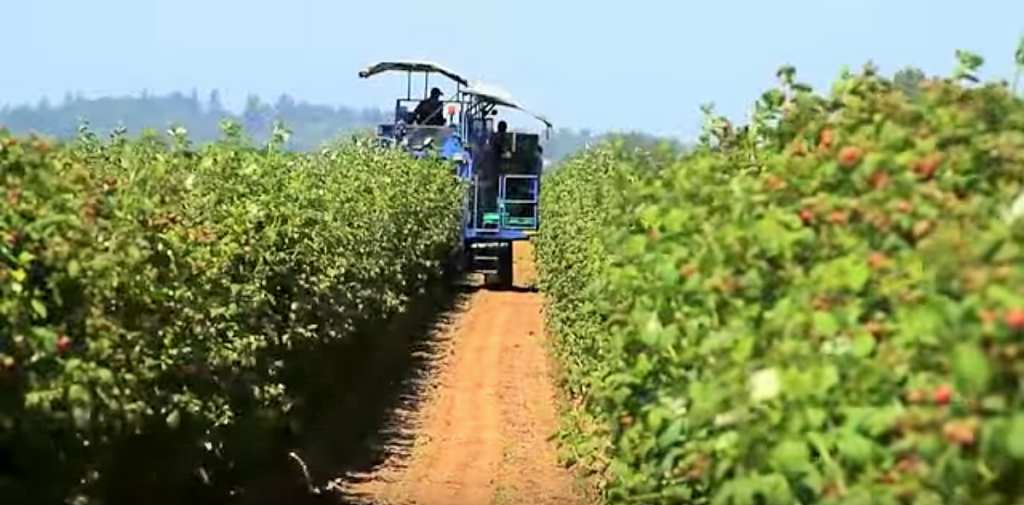

The difficulties of BC raspberry industry just got a little more acute with the extended blast of winter that the Fraser Valley experienced last February. Although still a little too early to assess the extent of plant injury, the Growers are starting to see some evidence of winter damage to the Meeker variety which accounts for
Industry in Decline

The raspberry acreage in the Valley has been diminishing since the highs of the 1990s with as much as 5000 acres compared to the current plantings numbering around 2000 acres. The trend of diminishing acreage will likely continue if the current market conditions persist, which is quite likely.
Most of
Washington Growers watch Imports
The Canadian raspberry growers are sharing the pain with their US counterparts in Washington State. Struggling with cheap imports, the Washington Growers are looking at trade remedy as a solution. Washington production numbers have not slumped like the BC production. In that respect, Washington raspberry industry has remained robust for now.
Financial Position Weak
Majority of the BC growers belong to the working class farming families. The economic boom and prosperity experienced by British Columbia in the last 5 years have completely missed the BC’s berry sector. The financial condition of BC Growers has become tenuous with back to back years of low returns. The situation has been exacerbated by government policy which has added to the burden.

Future Uncertain
If the acreage falls below a particular threshold, there is a potential to impact the packers as well. Industry leaders are looking at ways of sustaining the industry, which includes drawing the attention of the Provincial government to the impact of recently imposed policies. The industry is also investing heavily in a Berry Breeding Program which is seen as key to industry competitiveness.
But the Growers can’t wait for long term solutions. Agriculture commodity prices are set by global markets. As price takers, Growers can’t pass on their rising costs to the consumers. They are looking for immediate relief either through trade remedies, or exemption from Government-imposed costs. It is yet to be s