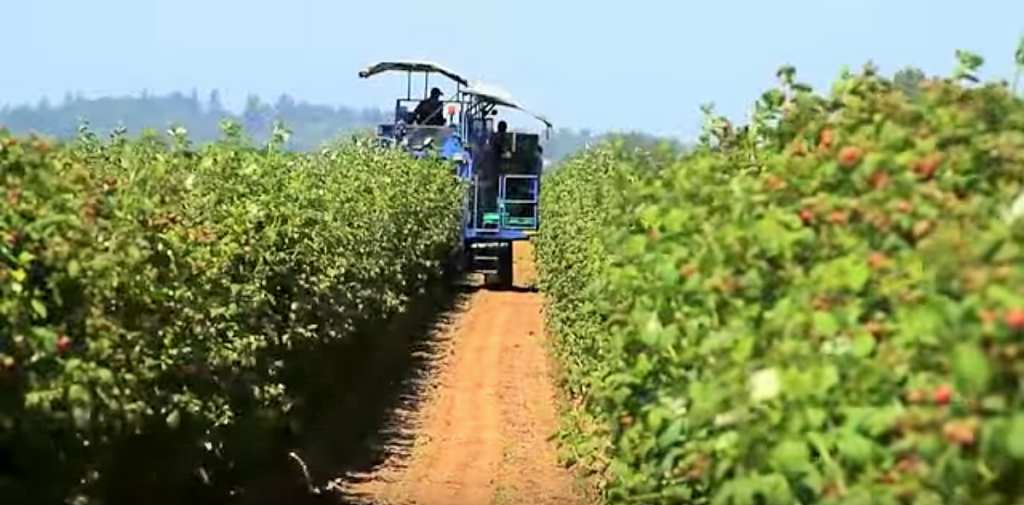

The blueberry industry has seen tremendous growth in the last decade. The North West has become one of the biggest producing region in the world. Between BC, Oregon, and Washington the total estimated production for 2019 was 470 million pounds. These numbers are likely to grow higher as newly planted acreage continues to mature.
Increasing production has not translated into improved profitability for the growers. In fact, return per pound has steadily declined over the last decade. Correspondingly, the cost of production has gone up steadily over the same time to the point where the viability of blueberry production has become challenging under the current model.
In BC, this has become particularly difficult as efficiencies are lower with smaller farm size and higher land and input costs. Recent government policy has added to the burden with the rapid rise in minimum wages. This with other implicit taxes such as payroll health tax and well-licensing fees, the cost of production is likely to increase into the future.
The other challenge has been the lower returns as the timing of production overlaps with so many of the other producing regions in North America. Market saturation translates to some of the lowest returns on fresh sales to Northwest Growers during the peak of Duke harvest.
The Duke variety has been widely successful in the Northwest, including BC, but this has led to lopsided production with the majority of the blueberry crop coming in over 2-3 weeks. Besides, saturating the market, this has also the tendency to overwhelm packing facilities putting a strain on labor, facilities, and equipment over a short period of time.
The post-Duke window is starting to see a flattening of returns as well. While the later, September window, is starting to experience greater competition from exports from Mexico and Peru, giving retailers more choice in sourcing product. Trend to more intense competition will continue.
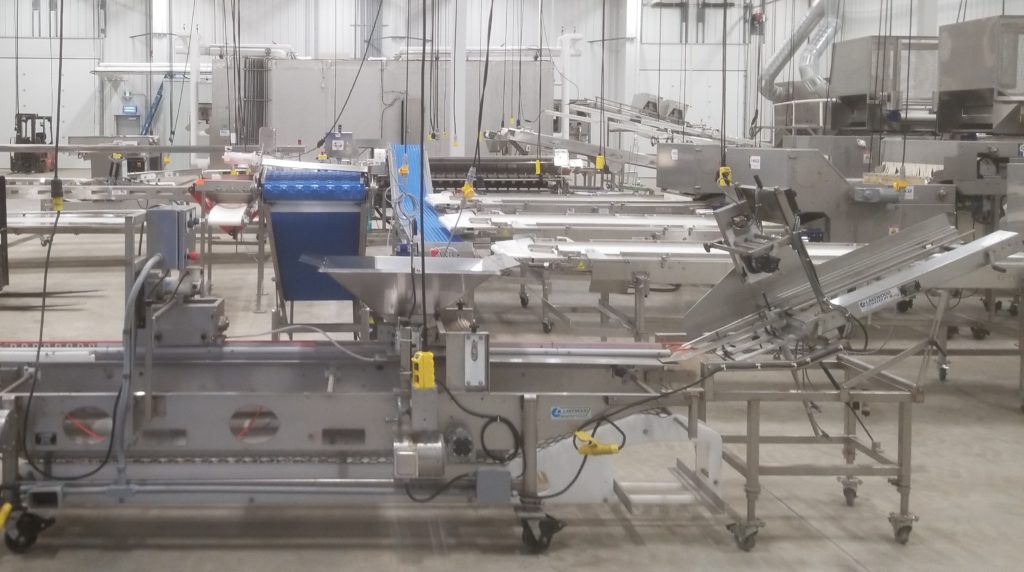
On the positives, the producers in the Northwest remain one of the most efficient, and leaders in the production of IQF blueberry. The climate is conducive to producing a good quality product. Packers have invested heavily in processing equipment to take advantage of the abundance of fruit at peak. However, beyond the short window of peak resource optimization, facilities are underutilized for the balance of the season.
Which begs the question of where now for the blueberry industry in the Northwest. With lucrative years behind us, the industry as a whole has to look at ways of staying sustainable. One of the objectives of the industry as a whole has to be spread production over a longer period thereby making better use of valuable resources. Making this industry-wide structural change will require substantial investment in newer varieties that ripen off the Duke harvest window. But a prerequisite for this initiative has to be the availability of newer proven varieties. This has not yet happened.
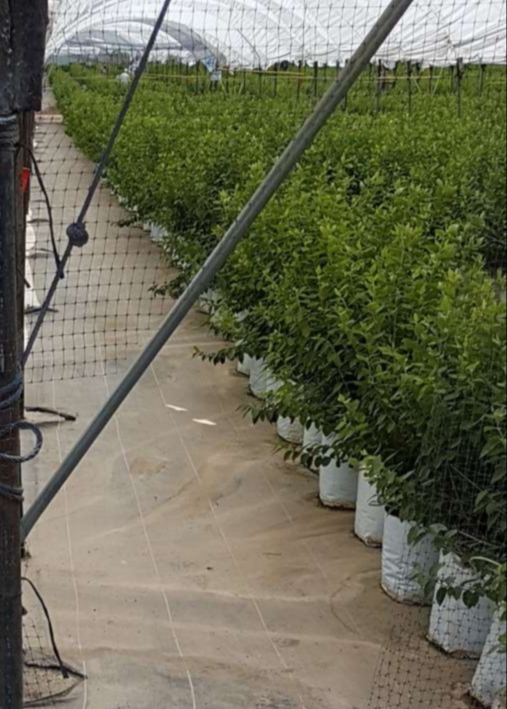
The adoption of newer growing methods could also help the industry expand the window of production. Whether that is growing in tunnels and/or substrate, the Northwest (US and Canada generally) has been a laggard. Mexico has been a leader in tunnel production and has shown to be able to produce fruit within a year of planting. Their window of production with higher returns has given them the incentive to invest in advanced modes of production.
The necessity for survival will be the catalyst for change in the Northwest. There will be some that will not be able to adapt. For those that do, there does not appear to be a single game-changer on the horizon, but a whole program of innovations. This will include innovations in mechanical technologies, adoption of new growing methods and modified growing environment along with better varieties. On the packing side, further investment and adoption of new sorting technologies and robotics applications. On the marketing end, there has to be continued focus on new product development and ongoing initiatives for access to new and untapped markets.